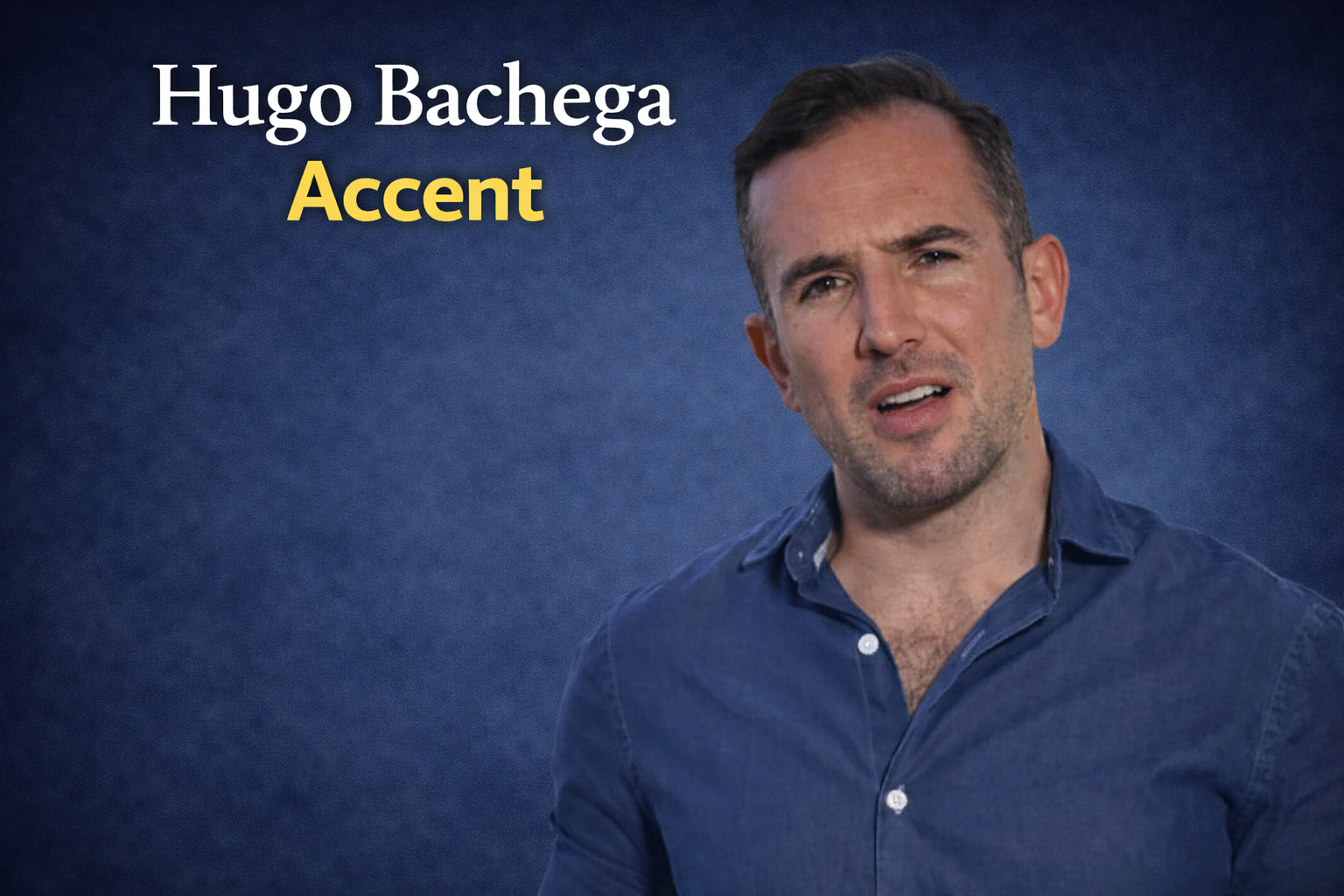
Hugo Bachega is one of the BBC’s most recognized international correspondents, celebrated not only for his in-depth reporting but also for his distinctly captivating voice. His BBC journalist accent has become a conversation starter among viewers worldwide, sparking genuine curiosity about the cultural and linguistic journey behind it.
Understanding the Hugo Bachega accent means tracing a life shaped by multiple languages, countries, and cultures. His voice carries the clear imprint of a multicultural upbringing, making him both relatable and unique in the world of global journalism. As a Brazilian-born BBC reporter who speaks Portuguese as his native tongue, his speaking style stands apart from the typical British Received Pronunciation heard on broadcast news.
Who Is Hugo Bachega?
Hugo Bachega is a seasoned BBC foreign correspondent and news reporter known for his insightful coverage of major global events. Over the years, this Brazilian journalist working for the BBC has reported from some of the world’s most challenging environments, including conflict zones, political upheavals, and humanitarian crises.
His professional reputation is built on his ability to convey complex stories with clarity, empathy, and authority. Whether delivering live reports from Ukraine, the Middle East, or South America, Bachega demonstrates not only outstanding journalistic skill but also deep cultural awareness and impressive linguistic fluency. These qualities directly influence his on-air presence and speaking style.
What many viewers ask is: where is Hugo Bachega from? He was born in Brazil, where Portuguese shaped his earliest speech patterns. His education and career then brought him into sustained contact with English-speaking environments, setting the stage for the distinctive hybrid accent that audiences recognize today.
A Multicultural Background: Roots of His Accent
Unlike many BBC journalists who carry a distinctly British accent, the Hugo Bachega accent carries a rich international flavor rooted in his multicultural journalist background. Born in Brazil, Bachega grew up speaking Portuguese as his first language. Brazilian Portuguese phonetics, with its open vowels, rhythmic cadence, and melodic intonation, left a lasting imprint on how he later acquired and spoke English.
Throughout his career, Bachega has lived and worked across multiple countries, from Brazil to the United Kingdom, and across the Middle East and Europe. This exposure to different accents, dialects, and languages continually shaped the way he speaks today. Each international posting added new sonic layers, gradually smoothing some regional markers while preserving others.
His accent can best be described as a neutral global English accent with subtle Brazilian Portuguese undertones. It is clear, polished, and well-articulated, making it an ideal fit for international broadcasting, where clarity for a diverse, non-native English-speaking audience is absolutely essential.
The Blend of Tones in Hugo Bachega Accent
Linguistically, the Hugo Bachega accent is a fascinating blend of phonetic influences shaped by years of professional broadcasting and multicultural exposure. Understanding its components helps explain why so many viewers find it both distinctive and easy to follow.
Three key elements define this tonal blend:
- British Received Pronunciation (RP) Influence: Due to his BBC training and London-based work environment, Bachega naturally incorporates aspects of RP into his delivery, lending his speech a polished, authoritative quality associated with professional broadcasting.
- Brazilian Portuguese Undertones: Subtle hints of Brazilian rhythm, open vowel sounds, and syllable-timed speech patterns give his English a warmth and melody that pure RP voices often lack, making him instantly recognizable to attentive listeners.
- Neutral Global English: As a BBC foreign correspondent addressing an international audience across more than 200 countries, Bachega avoids heavy regional tones, opting instead for globally intelligible English that non-native listeners can follow with ease.
Together these elements produce a voice that is professional, approachable, and distinctive without ever becoming distracting. It is this carefully balanced hybrid accent that makes Bachega’s voice so memorable and so widely discussed on social media and in journalism circles alike.
Career Journey: From Brazil to the BBC
To fully appreciate the Hugo Bachega accent, it is important to trace his professional journey, because his career path is itself a story of cultural adaptability and linguistic evolution. He began working in journalism in Brazil, reporting for local media outlets on political affairs and social issues, where he earned a reputation for precise, analytical storytelling.
His talent eventually caught the attention of international broadcasters, leading him to join the BBC, one of the world’s most respected and globally reaching news organizations. Over time, he became one of the network’s most reliable international correspondents, deploying to high-stakes assignments that demanded both journalistic credibility and cross-cultural communication skills.
Each major assignment expanded his linguistic and cultural horizons, reinforcing the accent diversity that defines his voice today. His career exemplifies how living, reporting, and communicating across different countries shapes not just a journalist’s knowledge but their very voice.
- Covered the Russian invasion of Ukraine, delivering on-ground reports with calm authority that earned widespread viewer trust.
- Reported extensively from Middle East conflict zones, offering balanced, fact-based analysis to a global BBC audience.
- Leveraged his deep understanding of Latin American dynamics to cover South American political developments with rare contextual depth.
Each of these experiences immersed him in new linguistic and cultural environments, reinforcing his adaptability and continuously refining his communication style. His career arc is a masterclass in how authentic voice and multicultural experience can become the greatest professional assets a journalist can possess.
Why Viewers Notice Hugo Bachega Accent
Audiences consistently notice the Hugo Bachega accent because it does not fit neatly into a single recognizable category. It is not purely British, nor is it distinctly Latin American. Instead, it occupies a compelling middle ground, forming a neutral yet warm international English tone that modern global viewers find both credible and approachable.
In today’s globalized media environment, this quality is genuinely valuable. International news networks like the BBC cater to audiences across more than 200 countries, so having correspondents who can communicate in universally comprehensible English is vital. A BBC journalist with a Brazilian accent who has also mastered clear enunciation and controlled delivery achieves something rare: he speaks to everyone at once.
Furthermore, viewers are increasingly attuned to diverse accents in journalism. Gone are the days when a single standardized BBC accent dominated international airwaves. Journalists like Bachega represent a new generation of broadcasters who bring accent diversity, cultural awareness, and genuine on-the-ground experience to their reporting, making the news feel more authentic and globally resonant.
Key Traits That Define His Accent
- Brazilian Portuguese Influence: Open, rounded vowel sounds and a rhythmic syllable-timed cadence inherited from his native language give his English a warm, melodic quality that pure British broadcasters rarely possess.
- British Received Pronunciation Elements: BBC training and years in London-based broadcasting environments have instilled precise, careful articulation into his delivery, ensuring his speech remains authoritative and trustworthy.
- Neutral Global English Pronunciation: Extended professional exposure to multiple languages and cultures has smoothed out strong regional markers, producing an accent that is broadly accessible to non-native English listeners worldwide.
- Controlled Tone and Measured Cadence: Even when reporting from tense conflict zones or breaking news situations, his voice maintains a calm, steady pace that reassures viewers and builds lasting credibility.
- Cultural Clarity in Communication: His pronunciation and pacing reflect a deep awareness of international audience needs, ensuring that complex geopolitical stories land clearly and meaningfully regardless of the listener’s native language.
Accents in International Journalism: A Broader Context
To fully appreciate the Hugo Bachega accent, it is useful to understand how accent diversity is viewed within international journalism today. Historically, British Received Pronunciation was considered the hallmark of broadcast authority, closely associated with upper-middle-class British identity and the perceived voice of trustworthy, objective news.
However, as the BBC and other global media organizations expanded their international reach, a conscious shift toward accent inclusivity transformed the landscape. The goal became to reflect global diversity, attract broader audiences, and make news presenters more relatable to viewers in different cultural contexts. This evolution opened the door for journalists whose accents tell stories of real-world international experience rather than linguistic conformity.
This broader evolution paved the way for voices like Bachega’s, whose international tone symbolizes the genuinely global identity of modern news media. His accent is not simply a personal trait, it is a reflection of how journalism has evolved to embrace multicultural voices, diverse linguistic backgrounds, and the authentic communication styles that audiences worldwide increasingly expect and respect.
Audience Reactions and Social Media Buzz
The Hugo Bachega accent has generated considerable and largely positive discussion across social media platforms, including Twitter and YouTube. Viewers regularly comment on the distinctive quality of his voice, describing it variously as soothing, beautifully neutral, warm, and difficult to place, all of which speak to the genuine intrigue his speaking style generates among news audiences.
Many viewers openly admit that his unique voice first drew their attention before his reporting style won their long-term loyalty. This pattern suggests that his recognizable BBC journalist accent functions as an effective personal brand marker in an increasingly crowded media landscape, distinguishing him from hundreds of other correspondents and building a loyal international following across platforms.
Hugo Bachega’s Communication Skills Beyond His Accent
While the Hugo Bachega accent naturally draws initial attention, his communication skills extend far beyond the way he sounds. His ability to contextualize breaking news, explain complex geopolitical developments, and maintain composure under intense pressure in conflict zones reflects deep journalistic expertise earned over many years in the field. He bridges cultures and languages not just through his voice but through the substance and sensitivity of his storytelling.
He is also remarkably skilled at adapting his communication style across different platforms, whether delivering a high-stakes live report from a war zone, conducting a nuanced interview with a political leader, or crafting a concise and engaging social media update for digital audiences. This versatility and cultural clarity in communication make him an exceptionally effective journalist whose impact goes well beyond the surface qualities of his distinctive voice.
Lessons from Hugo Bachega Accent and Career
For aspiring journalists, public speakers, and anyone who communicates professionally across cultures, the story of the Hugo Bachega accent offers genuinely valuable lessons. His journey demonstrates that effective communication is not about adopting a single perfect accent or suppressing your linguistic heritage. It is about clarity, authenticity, and cultural adaptability. His Brazilian-born background, far from limiting his international career, became one of his most powerful professional assets.
| Lesson | Description |
| Clarity Matters More Than Perfection | Focus on being understandable to a global audience rather than imitating a specific regional accent. Non-native English speakers who communicate with clarity consistently outperform those chasing accent perfection. |
| Cultural Awareness Enhances Communication | Understanding your audience’s cultural context dramatically improves how your message is received and interpreted. Multicultural representation in media is not just an ethical goal, it is a communication advantage. |
By embodying these principles throughout his career, Bachega shows that language and accent can be powerful tools for genuine human connection rather than barriers to credibility. His story continues to inspire journalists, public communicators, and multilingual professionals around the world.
FAQs
What accent does Hugo Bachega have?
Hugo Bachega has a distinctive hybrid accent that blends Brazilian Portuguese phonetics with international English shaped by his BBC broadcasting career. His open vowel sounds, measured cadence, and neutral global English pronunciation make his voice immediately recognizable and widely appreciated by international audiences.
Where is Hugo Bachega from originally?
Hugo Bachega was born in Brazil, where Portuguese was his first language and the foundation of his vocal identity. His Brazilian roots remain clearly audible in the warm, melodic quality of his English speech, even after years of working as a BBC foreign correspondent across multiple continents.
Why does Hugo Bachega’s voice sound different from other BBC journalists?
Unlike most BBC correspondents trained primarily in British English environments, Bachega brings authentic Brazilian Portuguese phonetics and a truly international linguistic background to his speech. This creates a unique vocal blend that listeners find instantly recognizable and distinct from traditional British Received Pronunciation.
What languages does Hugo Bachega speak?
Hugo Bachega is fluent in Portuguese, his native Brazilian language, and English, which he uses professionally in his BBC broadcasting career. His multilingual background and extensive international reporting experience have equipped him with strong communicative awareness across a broad range of cultural and linguistic contexts.
Has Hugo Bachega’s accent changed over his journalism career?
Over the course of his career, Bachega’s accent has evolved as sustained BBC broadcasting work and living across different countries gradually refined his delivery. However, his core Brazilian Portuguese influence, including characteristic vowel sounds and rhythmic speech patterns, remains a consistent and defining feature of his speaking style.
Is Hugo Bachega’s accent considered professional for international broadcasting?
Absolutely. His long and highly successful career as a BBC foreign correspondent confirms that his accent fully meets the highest standards of international journalism. In modern global broadcasting, clarity, credibility, and cultural authenticity matter far more than conforming to any single regional accent norm.
How has Hugo Bachega’s multicultural background influenced his journalism?
His multicultural background as a Brazilian-born journalist working across the Middle East, Europe, and Latin America has given him exceptional cultural sensitivity and the ability to connect authentically with diverse global audiences. This cultural awareness enhances both his storytelling depth and his on-air communication style.
Conclusion
The Hugo Bachega accent is far more than a simple linguistic curiosity. It is the living product of a remarkable journey across continents, languages, and cultures, all of which have shaped him into one of international journalism’s most compelling and credible voices. His blend of Brazilian Portuguese phonetics, British broadcasting polish, and international neutrality challenges outdated assumptions about what a professional broadcast voice must sound like, and proves that multicultural representation in media strengthens rather than weakens journalistic authority.
As global audiences continue to demand greater diversity and authenticity from their news sources, journalists like Hugo Bachega serve as genuine role models for the next generation of international communicators. His voice reminds us that effective journalism is not only about the words we choose, it is about the cultural bridges we build, the accent diversity we embrace, and the authentic human connections we create across borders.

Den Mark is a passionate writer specializing in celebrity news, biographies, and net worth insights. With a keen eye for detail, he brings readers the latest updates and intriguing stories from the world of fame.