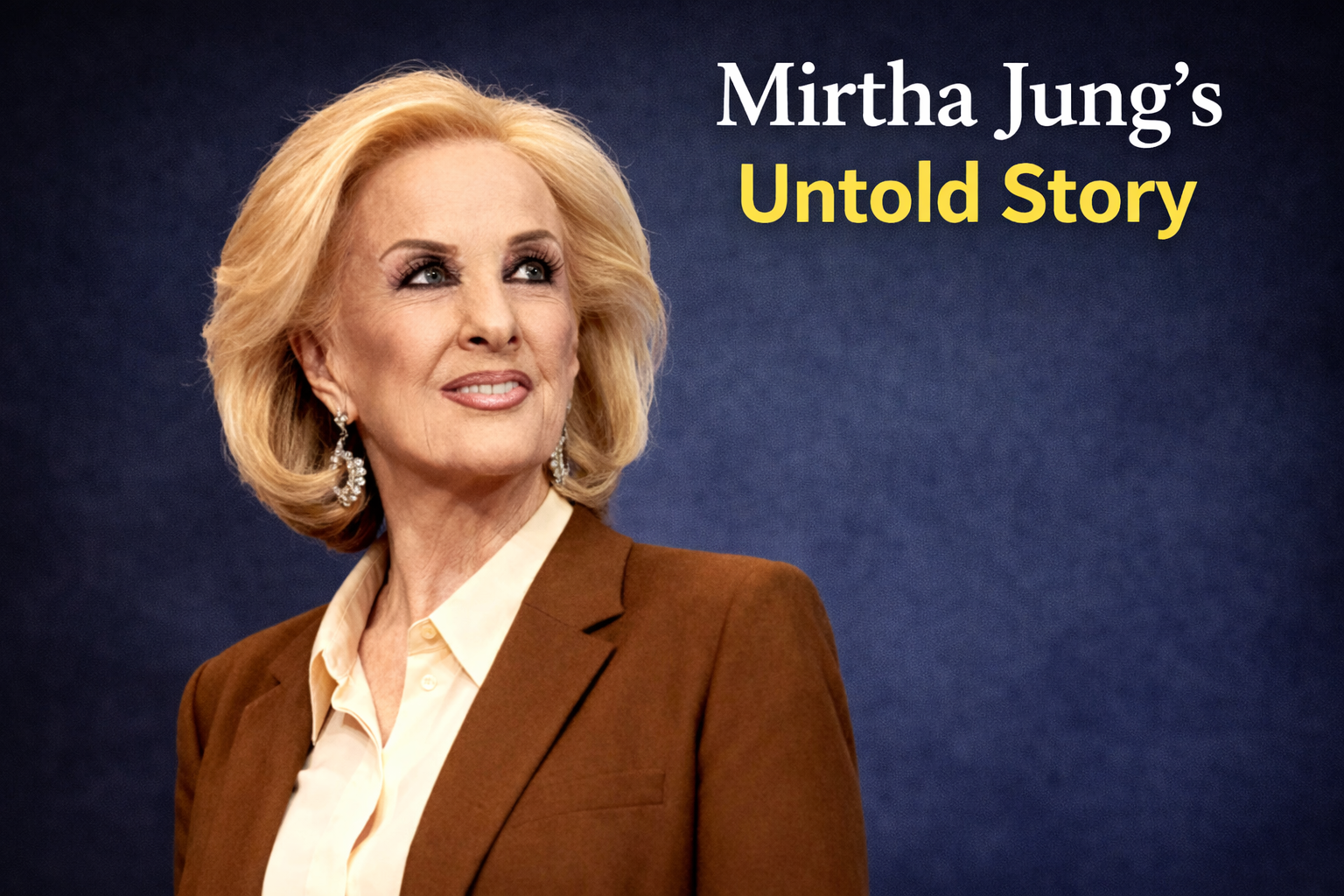
Mirtha Jung is a woman whose real story goes far deeper than what Hollywood ever showed. Born in Cuba and raised amid displacement and economic hardship, this Cuban-American woman found herself drawn into one of the most notorious drug trafficking operations in American history, standing at the crossroads of love, crime, and consequence. Her name became inseparable from that of her husband George Jung and the dark shadow of the Medellín Cartel led by Pablo Escobar.
Yet behind the headlines and the dramatized film portrayals lies a far more complex human story. Mirtha was not simply a bystander — she was an active participant who later faced the full weight of her choices, paid a serious legal price through federal drug conviction, and worked to rebuild a life on the other side of incarceration. Her journey is one of transformation as much as transgression, and understanding it requires looking honestly at both sides.
What makes Mirtha Jung’s real story enduringly compelling is not the glamour that popular culture projects onto cartel life, but the raw truth of what that life actually cost her — her freedom, years with her daughter Kristina Sunshine Jung, and her sense of self. For anyone seeking the untold biography beyond the Blow movie version, this is the complete account of the woman, the mother, and the survivor that history too often overlooks.
Early Life of Mirtha Jung
Mirtha Jung was born in Cuba, and her early life was defined by migration, displacement, and the search for stability in a new country. She immigrated to the United States as a young woman, navigating an environment that was often unwelcoming to those who arrived without resources or established connections. Friends who knew her during these years described her as intelligent, confident, and emotionally strong — qualities that shaped both her ambitions and her vulnerabilities.
Growing up without financial security instilled in Mirtha a fierce independence alongside a genuine hunger for a different kind of life. Nothing in her Cuban-American upbringing or her early years in the United States suggested that she would one day become connected to one of the most dangerous criminal organisations in history. Yet the social environments she moved through gradually brought her closer to circles where fast money, drugs, and danger quietly intersected.
Meeting George Jung
Mirtha met George Jung in California during the 1970s, and their relationship grew with remarkable speed. George was already involved in cocaine trafficking at the time, though his largest operations were still taking shape. Their connection was fueled by shared energy, ambition, and a fast-paced lifestyle that existed entirely outside conventional boundaries — and love played a central role in Mirtha’s decision to stay even after she understood the true nature of his world.
Their relationship was passionate but volatile from the start, marked by the constant pressures of a life lived on the wrong side of the law. Despite the instability, Mirtha and George married and had a daughter, Kristina Sunshine Jung, creating a family that existed in the precarious space between domestic life and organised crime. What had begun as romance had slowly and irreversibly become involvement in drug trafficking on a massive scale.
Life Connected to the Medellín Cartel
Through George Jung, Mirtha became directly connected to the Medellín Cartel — the Colombia-based cocaine trafficking organisation led by Pablo Escobar that controlled most of the cocaine entering the United States throughout the late 1970s and 1980s. Her role was not that of a cartel leader, as many people mistakenly believe, but she was deeply involved, assisting with finances, travel arrangements, and communication in ways that made her a genuine associate rather than a passive bystander.
Life within that orbit came with extraordinary wealth but also with constant fear, stress, and moral compromise. The cartel operated through violence, corruption, and betrayal, and those connected to it lived under permanent threat. Many people imagine cartel life as glamorous based on what films portray, but in reality it was dominated by paranoia and anxiety — a surface of opulence masking an existence that was slowly destroying everyone inside it.
Arrest and Prison Life
Eventually, authorities dismantled much of the cartel’s network in the United States, and Mirtha Jung was arrested on drug charges and sentenced to prison. Her federal drug conviction was a defining rupture — removing her overnight from the world she had known and forcing a direct confrontation with the real consequences of her choices. The luxury and freedom vanished completely, replaced by isolation, strict routine, and long periods of unavoidable reflection.
Prison changed her life completely and she later described it as frightening but necessary for her personal awakening. The experience of incarceration was made especially painful by the separation from her young daughter Kristina during critical years of childhood development. It was inside prison that Mirtha began the slow, difficult process of genuine self-reckoning — reconsidering who she was, what she had done, and who she still had the possibility of becoming.
Relationship with Her Daughter
The relationship between Mirtha and her daughter Kristina Sunshine Jung is the most emotionally complex and humanising thread running through her entire story. Because of drug addiction and time spent in prison, Mirtha was frequently absent during the years her daughter needed a consistent maternal presence most. This absence created deep emotional damage and a distance between mother and daughter that proved extremely difficult to repair.
Mirtha has spoken openly about her regret as a mother, stating that losing her daughter’s trust affected her more profoundly than losing money or freedom ever did. As adults, Mirtha and Kristina worked toward reconciliation, though their relationship remained complicated and at times publicly strained. Kristina has spoken about the challenges of growing up in the shadow of her parents’ criminal legacy — and their story together remains the most powerful reminder that the consequences of crime do not end at the prison gate.
The Film Blow and Public Image
The 2001 film Blow brought the story of the Jungs to a massive global audience, with Johnny Depp playing George Jung and — contrary to what some sources incorrectly state — Franka Potente portraying Mirtha. The film dramatized their rise and fall within the cocaine trade, depicting Mirtha as a glamorous but volatile and destructive figure. For millions of viewers, this fictionalized version became their primary reference point for understanding who Mirtha Jung actually was.
However, the Blow movie accuracy when measured against real life is seriously limited. The film was built around George Jung as its central character, meaning Mirtha’s portrayal was shaped to serve his narrative arc rather than her own truth. Key parts of her story — including her remorse, her personal suffering, and her genuine efforts to change — were largely omitted. Those who rely on the film as biography are working from a picture that is incomplete at best and misleading at worst.
Life After Crime
Following her release from prison, Mirtha Jung committed herself to building a life completely removed from the criminal world that had defined her earlier years. Unlike many former criminals who seek fame or profit from their past, Mirtha chose a quiet and private existence — reportedly working on personal writing projects and focusing on recovery and family matters. She used her story as a cautionary tale when she did speak publicly, rather than as a vehicle for celebrity.
Her life after crime represents the most underreported chapter of her biography — one defined not by cocaine distribution or cartel connections but by the harder, less dramatic work of personal redemption. Most of the cartel-era wealth was lost or seized, dismantling another common misconception that she remained financially comfortable after her conviction. Her goal, by all available accounts, became peace rather than recognition.
Lessons from Mirtha Jung’s Story
- The glamorization of cartel life is deeply misleading — what appears as freedom and wealth from the outside carries hidden costs in fear, instability, and moral erosion that accumulate until everything collapses at once.
- Children pay the highest price for their parents’ criminal choices — Kristina Sunshine Jung’s difficult childhood is the clearest evidence that consequences of crime extend across generations and fall hardest on the innocent.
- Redemption after drug conviction is possible but never instant — Mirtha’s post-prison journey shows that genuine change is slow, unglamorous, and requires sustained honest effort over many years.
- Hollywood crime drama exaggeration erases real human complexity — the Blow film version of Mirtha reduced a multidimensional woman to a dramatic archetype that served the story’s needs rather than the truth.
- Poverty, displacement, and immigration vulnerability create openings that criminal networks deliberately exploit — understanding Mirtha’s Cuban-American background is essential to understanding her choices rather than simply condemning them.
- Drug addiction and family damage are inseparable consequences — Mirtha’s story demonstrates that substance abuse within criminal lifestyles destroys family bonds in ways that outlast any prison sentence.
Common Misunderstandings
One of the most persistent misunderstandings about Mirtha Jung is that she was a powerful cartel leader or a woman who controlled operations. This is not accurate. She was deeply involved as a cartel associate — helping with finances, logistics, and communication — but she did not direct or lead the network. Treating her as a cartel boss both overstates her role and conveniently simplifies a more complicated reality about the ways women become entangled in organised crime.
Another widespread misconception, fueled directly by the Blow movie, is that she lived with glamour and enjoyed every moment of the lifestyle. In reality, fear and stress dominated her daily life throughout those years, and most of the wealth associated with that period was eventually lost or seized by authorities. The true story of Mirtha Jung is one that mainstream media portrayals have consistently distorted — and correcting that distortion is part of why her story continues to deserve serious, honest attention.
Why Her Story Still Matters
Mirtha Jung’s story remains powerfully relevant because it sits at the intersection of multiple conversations that society is still actively having — about the war on drugs and its human cost, about how women are judged within criminal narratives, about the possibility of genuine rehabilitation after serious wrongdoing, and about what true crime storytelling owes to the real people it portrays. Her life is not simply a crime story; it is a human story of mistakes and the search for redemption that speaks to enduring questions about justice and change.
In an era where true crime content dominates popular culture, Mirtha Jung’s real story offers something genuinely valuable — a reminder that behind every crime headline is a human being who must live with the consequences long after the cameras stop. Her willingness to confront her past honestly, rebuild quietly, and carry the weight of maternal regret without seeking sympathy makes her not just a figure from criminal history but a voice that the ongoing conversation about crime, punishment, and redemption genuinely needs.
FAQs
Who is Mirtha Jung in real life?
Mirtha Jung is a Cuban-American woman and former wife of drug trafficker George Jung, known for her involvement with the Medellín Cartel and her portrayal in the 2001 film Blow.
What did Mirtha Jung actually do in the Medellín Cartel?
She assisted with finances, travel arrangements, and communication as a cartel associate — she was not a leader or organiser of operations.
Who played Mirtha Jung in Blow and is the movie accurate?
Franka Potente portrayed her in the film, but Blow movie accuracy is limited — it omitted her remorse, suffering, and efforts to change entirely.
Did Mirtha Jung go to prison and what was her sentence?
Yes, she received a federal drug conviction and served a prison sentence that separated her from her daughter Kristina during critical childhood years.
What happened to Mirtha Jung after prison?
She chose a quiet private life focused on personal recovery, writing projects, and rebuilding her relationship with her daughter Kristina Sunshine Jung.
Is Mirtha Jung still alive today in 2025?
Based on available information, Mirtha Jung is still alive, maintaining a low-profile private existence away from media attention.
How did Mirtha Jung’s drug addiction affect her daughter Kristina?
Her addiction and imprisonment left Kristina largely without maternal presence during childhood, creating deep emotional damage and a strained mother-daughter relationship that took years to begin healing.
Conclusion
Mirtha Jung’s life is a testament to the devastating reach of choices made in pursuit of belonging, wealth, and excitement — and to the quiet, difficult courage it takes to rebuild after those choices have run their full destructive course. She is neither a simple villain nor a simple victim, but a fully human figure whose Cuban-American story of immigration, cartel involvement, federal conviction, and slow redemption resists every easy category that popular culture tries to place her in.
What her story ultimately offers is not the glamorized crime narrative that the Blow movie sold to millions, but an honest reckoning with what drug trafficking and cartel life actually do to people — to the woman living it, to the daughter growing up in its shadow, and to every relationship caught in the wreckage. Mirtha Jung survived a world designed to consume people, and that survival — shaped by regret, maternal guilt, and the unglamorous work of genuine change — remains the most important and least told part of her story.

Den Mark is a passionate writer specializing in celebrity news, biographies, and net worth insights. With a keen eye for detail, he brings readers the latest updates and intriguing stories from the world of fame.