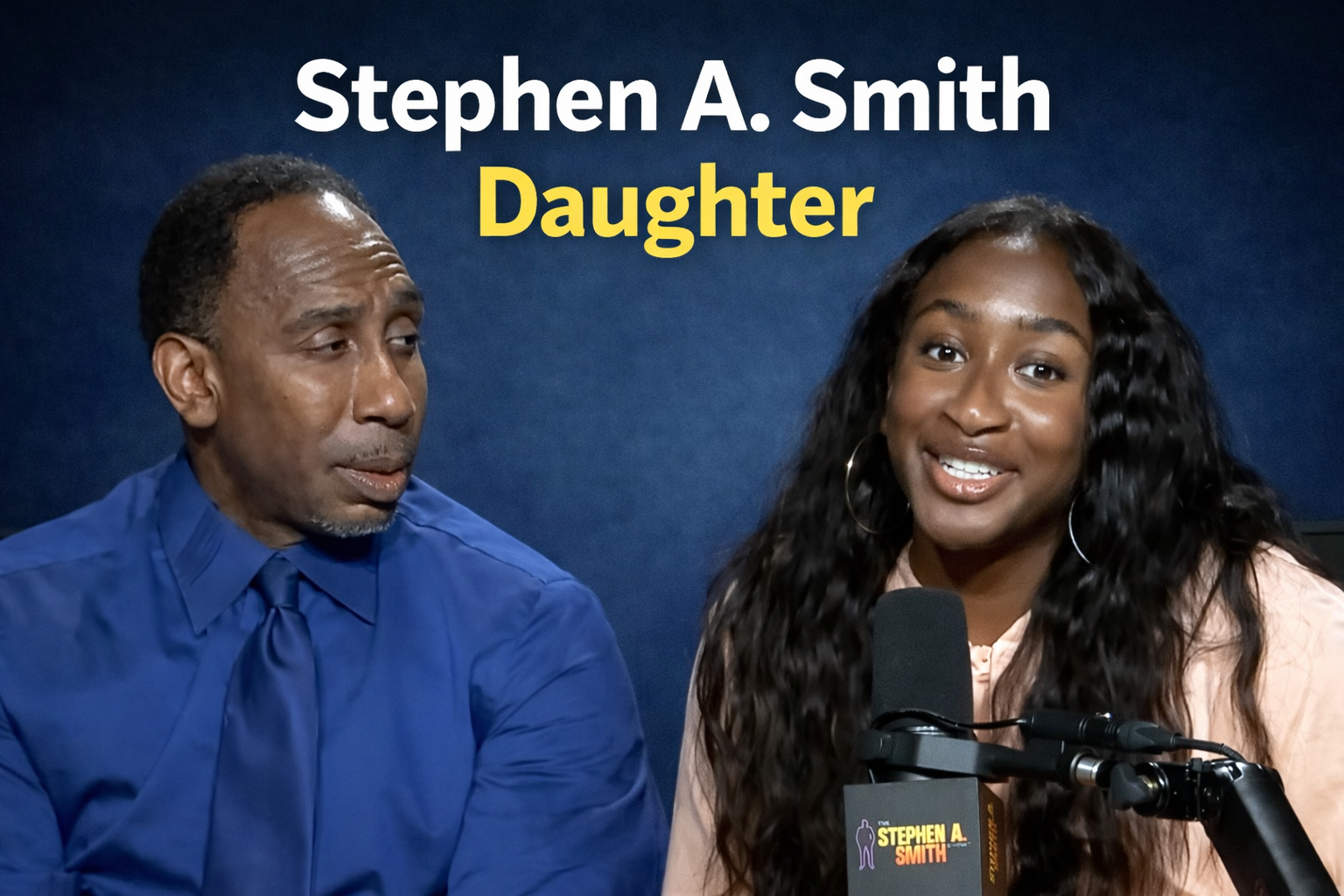
The internet has a way of turning baseless speculation into viral panic within hours, and that’s exactly what happened when rumors began circulating that ESPN’s Stephen A. Smith had lost his daughter. Fans flooded social media with grief and concern, but before accepting any of it as truth, it’s worth taking a deep breath and looking at the actual facts — because the story is far more complicated, and far less tragic, than the headlines suggest.
The Rumor: What Was Said?
The rumor that Stephen A. Smith’s daughter passed away began circulating across social media platforms and low-credibility websites, claiming that his eldest daughter, Samantha Smith, had died. The reports were vague, citing no sources, no dates, and no verifiable details — yet they spread with alarming speed, leaving fans heartbroken and searching for answers.
What made this celebrity death hoax particularly believable to some was Smith’s history of real personal tragedy. In June 2017, Smith lost his mother, Janet, to cancer, and he has been open about the profound emotional toll that loss took on him. Because his grief was real and documented, fans found it easier to believe another tragedy had struck his family — even without a shred of evidence to support the claim.
The Facts: What Really Happened?
The truth is straightforward: as of the latest verified information, both of Stephen A. Smith’s daughters, Samantha and Nyla, are alive and well. There is no credible evidence supporting the rumor that his daughter passed away. Smith has continued to speak about his daughters publicly, feature them on his podcast, and reference them in interviews — none of which would be consistent with the loss the rumor describes.
Samantha Smith has made appearances on her father’s podcasts and other shows, while her younger sibling, Nyla Smith, has largely stayed away from the limelight. In fact, Samantha famously took over her dad’s podcast and roasted him on air — hardly the behavior of someone who doesn’t exist. This Stephen A. Smith daughter death rumor, in short, was a fabrication from start to finish.
How the Rumor Spread
Clickbait Websites Prioritizing Traffic Over Truth
Sites like Bioweb Hub and TheViralPink published articles around the Stephen A. Smith daughter story, citing no verifiable sources and relying on recycled rumors. These platforms thrive on emotional headlines designed to generate clicks, with no regard for the real-world harm their fake celebrity news causes to public figures and their families.
Social Media Amplification Without Verification
On platforms like Twitter (X) and Reddit, users sporadically repeated the unverified death claim without evidence. Some posts suggest confusion with other celebrities, while others appear to be deliberate hoaxes. The absence of basic fact-checking is precisely what allows such rumors to persist long after they should have been put to rest.
Smith’s Privacy Was Mistaken for Confirmation
Smith’s private nature means he doesn’t always respond to rumors, which can make them seem more plausible to the public. His silence was never a confession — it was simply the choice of a father who refuses to dignify baseless claims with a response.
The Psychology of Celebrity Death Hoaxes
Research indicates that false celebrity death rumors spread due to morbid curiosity and algorithmic engagement. Since Smith is a polarizing ESPN sports commentator, some may spread misinformation to provoke reactions or exploit his fame. The more controversial a public figure, the more likely bad actors are to weaponize false tragedy around them.
The Impact of the Rumor
Emotional Distress for Fans and Family
The rumor is not just a headline; it’s a deeply personal falsehood that caused real emotional distress across the Stephen A. Smith family and fanbase. For Smith, who lost his mother to cancer in 2017, such rumors likely reopen wounds from real tragedies. Fans who genuinely care about him were left grieving someone who is alive — a cruel and unnecessary experience driven purely by viral misinformation.
Damage to a Public Figure’s Reputation and Peace of Mind
False death rumors disrupt the lives of public figures in ways that are difficult to quantify. Smith has spoken openly about how his daughters are his greatest source of strength and joy. Forcing him and his family to exist in the shadow of fabricated tragedy is a genuine harm — one that no amount of online retraction can fully undo.
Normalizing Dangerous Misinformation Culture
When false stories go viral without consequence, they contribute to a broader culture where misinformation is normalized. Each unchecked rumor makes the next one easier to spread and harder to debunk. The Stephen A. Smith rumor is not an isolated incident — it’s a symptom of a digital ecosystem that rewards sensationalism over accuracy.
The Response to the Rumor
Stephen A. Smith chose not to directly address the rumor, which media scholars argue is often the most strategic response to baseless claims. Unlike other celebrities who quickly debunk internet death hoaxes, Smith has not directly addressed this story — possibly because engaging with it could legitimize it. His continued public presence, his podcast appearances alongside Samantha, and his open discussions about fatherhood served as a far more powerful rebuttal than any formal statement.
Those close to the situation and responsible media outlets have pushed back by publishing fact-checked reports and pointing audiences to verified information. There is no official communication to confirm the speculation, and it is safe to assume that his daughter is doing well and the death report is just another internet hoax. The best response to rumors like this is not panic — it’s patience, verification, and a commitment to trusting credible sources over viral headlines.
What Does This Incident Teach Us?
Silence Is Not Confirmation
When a public figure doesn’t respond to a rumor, it does not mean the rumor is true. Privacy is a right, not an admission. Stephen A. Smith’s decision not to engage with the false narrative reflects wisdom, not guilt. We must stop interpreting silence as evidence of tragedy.
The Source Always Matters
A story is only as credible as the outlet reporting it. If a claim about a major public figure originates from an unknown blog or clickbait site with no named reporters, no citations, and no corroboration from established news organizations, the default response should be skepticism — not sharing.
Real Grief Deserves Real Respect
Smith has experienced genuine loss, including the death of his mother and the emotional weight of raising two daughters as a single father. Fabricating or amplifying stories of additional tragedy around him is not just misinformation — it’s disrespectful to real pain that he has openly shared with the world.
Media Literacy Is a Non-Negotiable Skill
In the digital age, the ability to evaluate sources, cross-check claims, and resist the urge to share emotionally charged content without verification is essential. The viral spread of this rumor is a reminder that media literacy isn’t optional — it’s the foundation of a responsible and informed online community.
What Should You Do When Faced with Similar Rumors?
Pause Before You Share
The moment you feel a strong emotional pull to share a piece of news — especially one involving tragedy or death — that’s precisely the moment to pause. Emotional urgency is one of the primary tools misinformation uses to bypass critical thinking. Take a breath, and ask yourself: where did this come from?
Verify Through Trusted Sources
Before accepting any claim as true, check whether it has been reported by established, reputable news organizations. If major outlets like ESPN, AP, Reuters, or The New York Times haven’t covered a supposed major event involving a prominent public figure like Stephen A. Smith, that silence is telling. One clickbait article is not a news story.
Report and Flag Misinformation
Most social media platforms have tools that allow users to flag misleading or false celebrity news. Use them. Reporting misinformation isn’t about policing speech — it’s about protecting real people from the harm that false stories cause. You have a role to play in keeping your online community honest.
Educate Others With Compassion, Not Condescension
When you see friends or family sharing false information, correct it — but do so kindly. Most people who share misinformation aren’t malicious; they’re simply reacting to content designed to manipulate emotions. A gentle redirect and a link to verified information will go much further than public shaming in actually stopping the spread.
FAQs
Did Stephen A. Smith’s daughter really pass away?
No, this is entirely false. Both of Stephen A. Smith’s daughters, Samantha and Nyla, are alive. The rumor originated from unverified clickbait websites with no credible sourcing.
Who are Stephen A. Smith’s daughters?
Stephen A. Smith has two daughters named Samantha and Nyla Smith. Samantha has appeared on her father’s podcast, while Nyla largely stays out of the public eye.
Why do people believe Stephen A. Smith’s daughter died?
Many believe the rumor because it was spread by multiple websites that appeared authoritative, and because Smith’s history of real personal loss made another tragedy seem plausible to some readers.
Has Stephen A. Smith spoken about his daughters recently?
Yes. Smith regularly mentions his daughters in interviews and on his podcast. Samantha Smith even appeared on his show and famously roasted him in front of his audience, proving she is very much alive.
Where did the death rumor about Stephen A. Smith’s daughter start?
The Stephen A. Smith daughter death rumor appears to have originated from low-credibility clickbait websites and was then amplified by social media users who shared the story without verifying its accuracy.
Why didn’t Stephen A. Smith deny the rumor directly?
Smith is a very private person regarding his family, and media experts suggest that engaging with baseless internet rumors can sometimes give them undeserved legitimacy. His continued public life served as the clearest denial.
What happened to someone close to Stephen A. Smith in real life?
The real tragedy in Smith’s life was the death of his mother, Janet, who passed away from cancer in June 2017. He has spoken openly about how devastating that loss was and how his daughters, Samantha and Nyla, helped him through the grief.
Conclusion
The rumor that Stephen A. Smith’s daughter passed away is exactly that — a rumor, with no factual basis, no verified sources, and no acknowledgment from Smith or anyone close to him. It is a sobering example of how quickly misinformation can travel in the digital age, and how real emotional harm can be caused by stories that are entirely invented. Both Samantha and Nyla Smith are alive, and their father continues to speak about them with pride and love.
What this viral moment ultimately calls us to do is slow down. In a world where a single sensational headline can reach millions of people within minutes, the responsibility to verify before we believe — and especially before we share — has never been more important. Stephen A. Smith’s family deserves privacy, respect, and protection from the kind of careless digital behavior that turns fiction into trending fact. Let this be a reminder to always seek the truth before amplifying the noise.

Den Mark is a passionate writer specializing in celebrity news, biographies, and net worth insights. With a keen eye for detail, he brings readers the latest updates and intriguing stories from the world of fame.